
From Molecular Data to Testable Hypotheses.
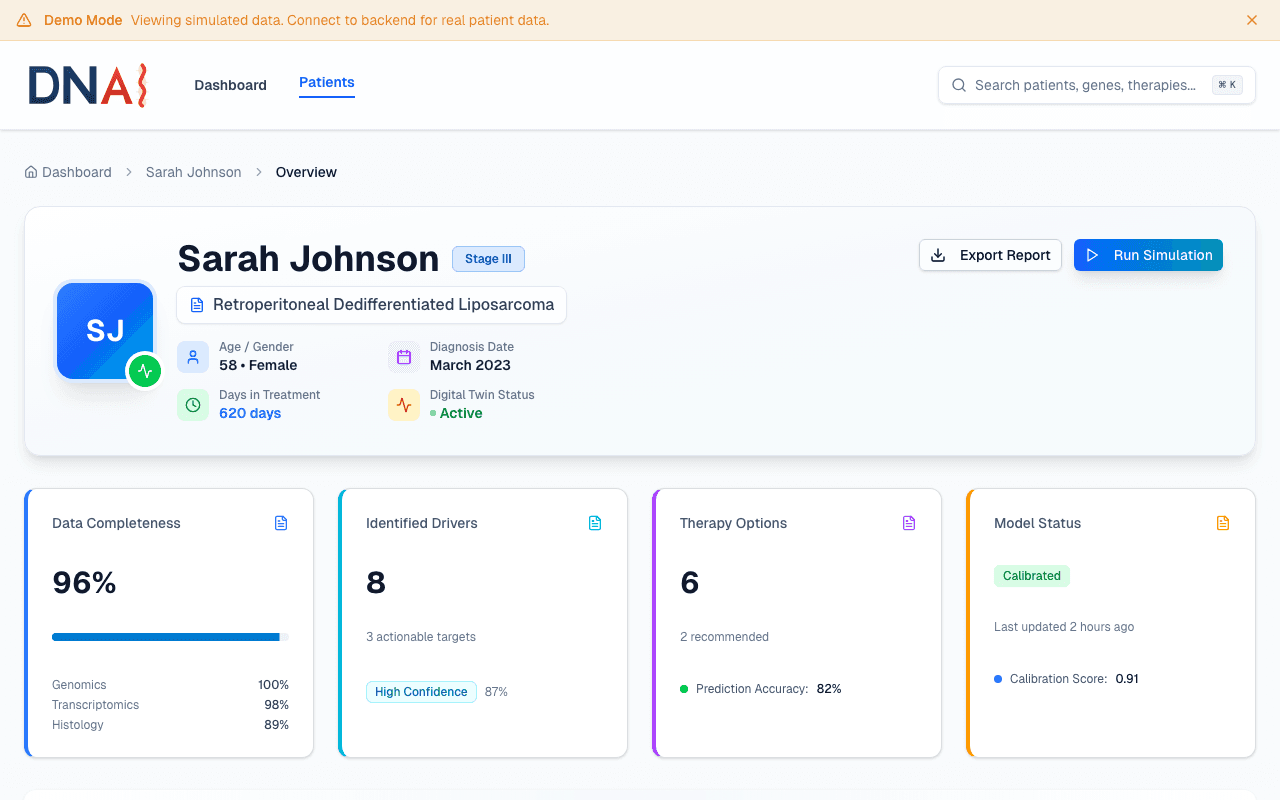
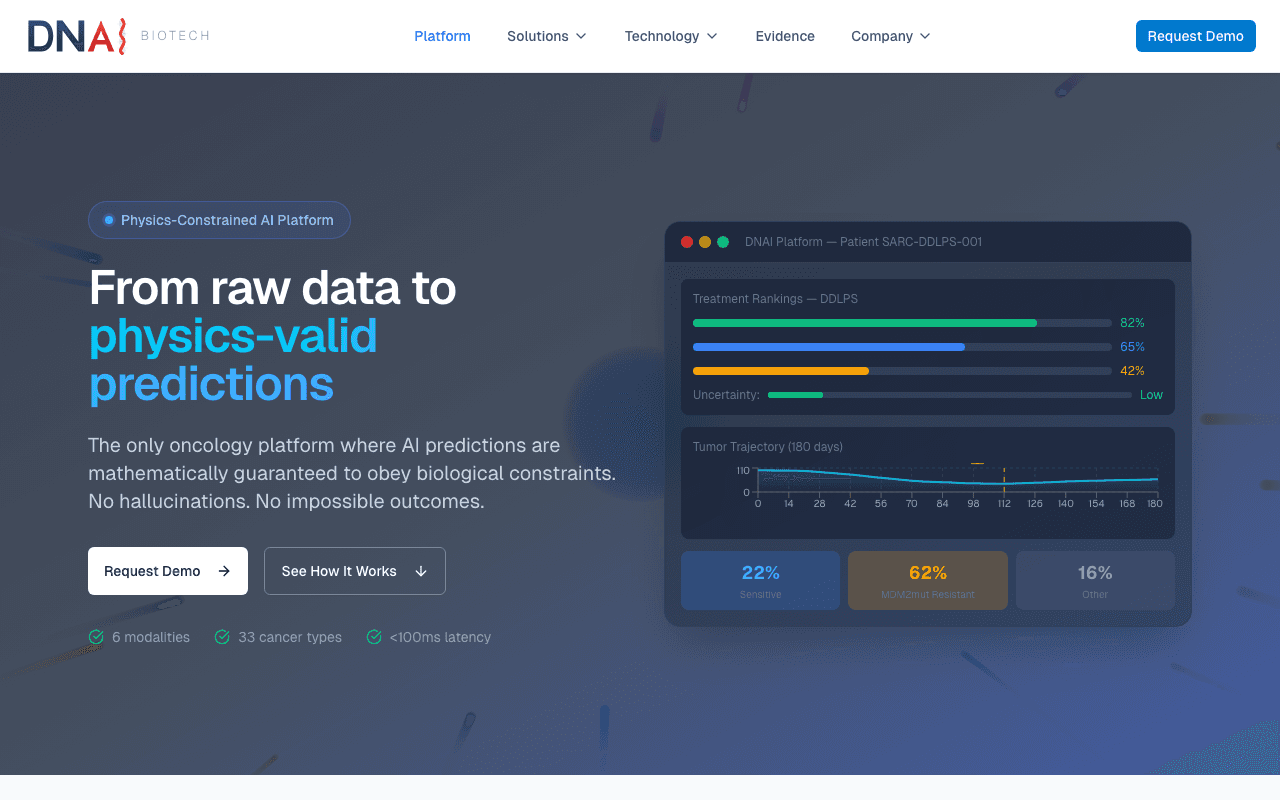
DNAI provides an interpretable simulation platform for molecular tumor boards, biomarker labs, and academic medical centers. Stratify cohorts, discover biomarkers, and validate hypotheses against external datasets — all with quantified uncertainty.
Built for the Research Workflow
Unlike clinical decision tools, DNAI is designed for exploratory research — where the value is in hypothesis generation, not clinical action.
Interpretable
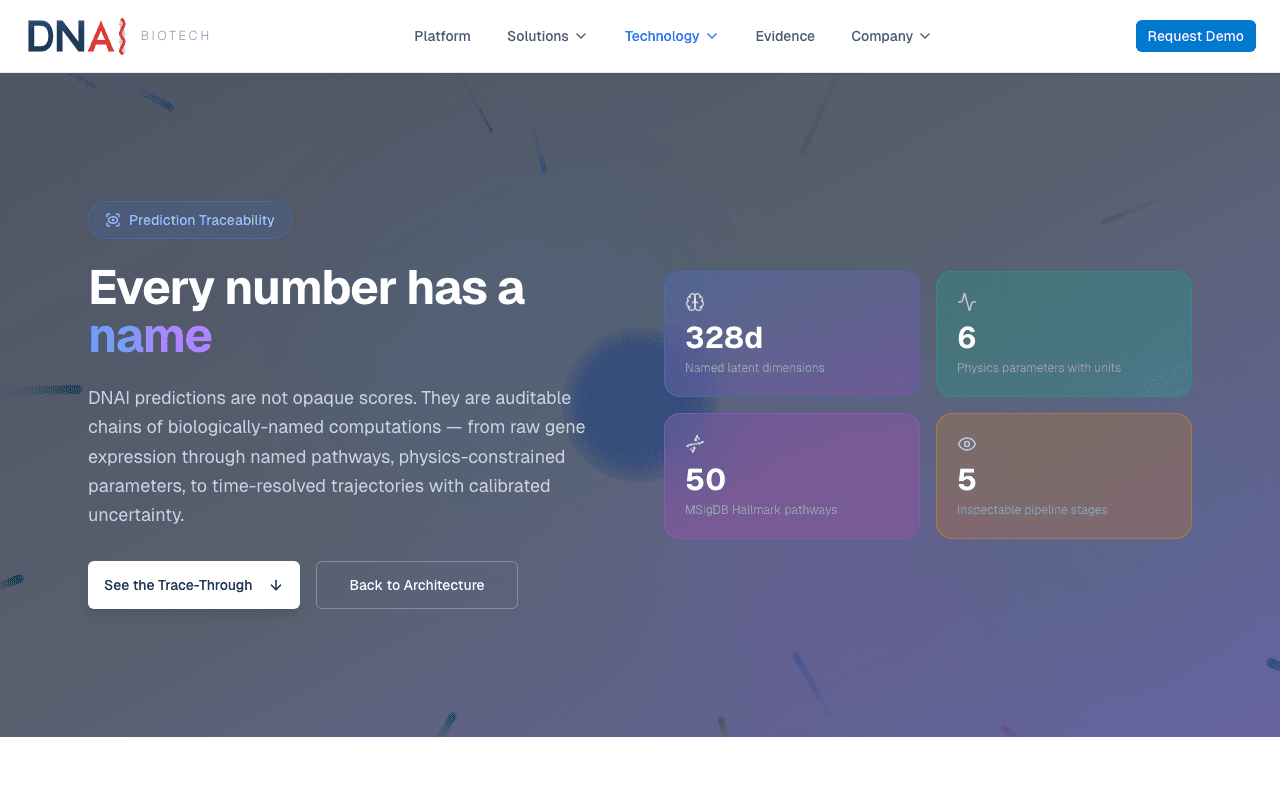
Every simulation traces to specific genes, pathways, and physics parameters. 108 cancer-specific pathway scores (50 Hallmark + 58 expansion pathways for drug response, immune subprograms, and stromal biology), driver gene rankings, and integrated gradients — not a black-box score.
Honest About Limits
Structured abstention tells you when the model cannot reliably simulate. OOD detection, per-cancer reliability tiers, and Information Sufficiency Scores flag unreliable results.
Multi-Omics Native
RNA-seq, DNA mutations, CNV, methylation, and histopathology — fused probabilistically. Works with partial data via PoE; WSI required for BRCA and other histology-dependent types.
Research Applications
Four core use cases for translational oncology teams
Cohort Stratification
Encode your cohort into DNAI's 328-dimensional structured latent space. Cluster patients by pathway activity profiles rather than single-gene markers.
Biomarker Discovery
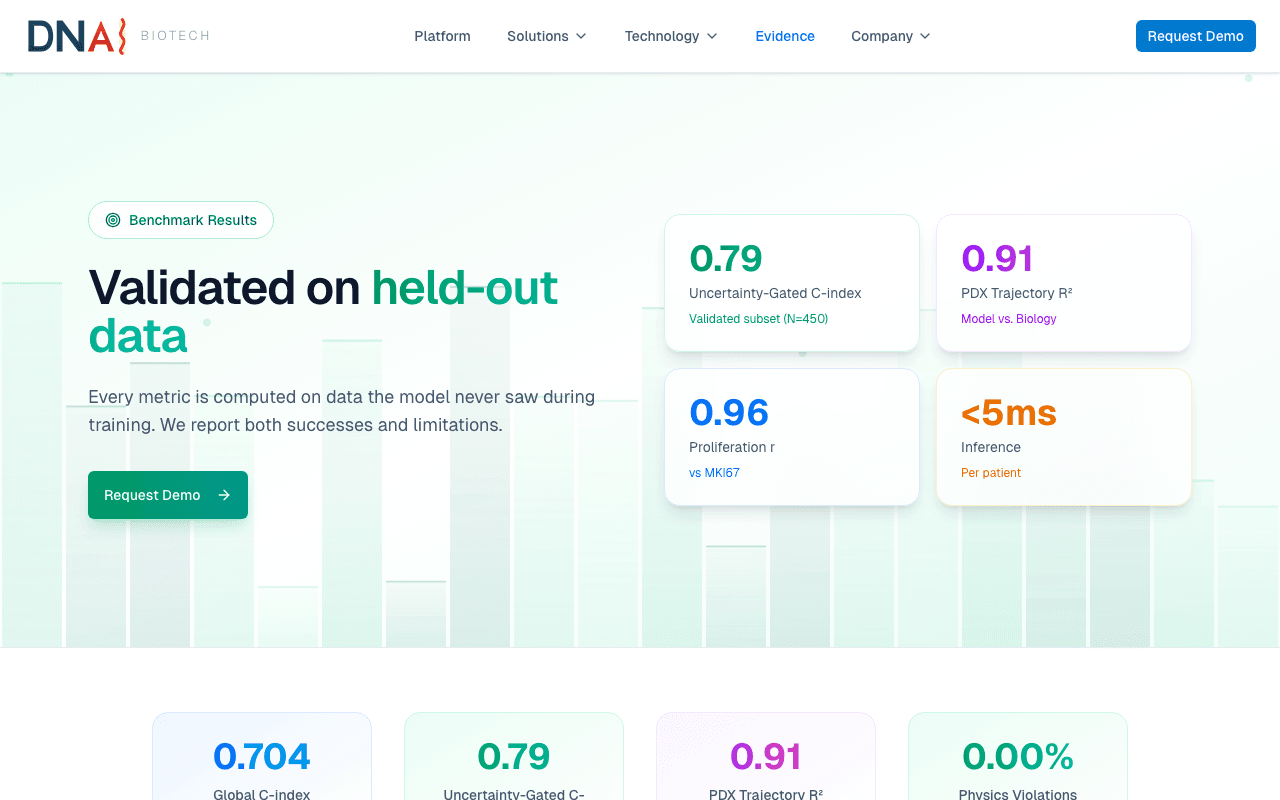
Use the Driver Module (AUROC 0.933) for driver gene identification and integrated gradients for pathway-level attribution. Identify which molecular features most strongly influence simulated outcomes.
Hypothesis Generation
Run virtual experiments by simulating treatment outcomes across molecular subgroups. Drug combination discovery (ρ=0.800 on 1,209 pairs) and schedule optimization (42% dose reduction) enable systematic in silico exploration. DNA-only Panel Adapter (Mode B) supports 167 gene panels when full multi-omics is unavailable.
Retrospective Validation
Provide de-identified data from a completed trial or cohort study. DNAI simulates outcomes and compares against actual results — producing performance metrics, per-subtype analysis, and calibration curves.
Technical Foundation
Validated architecture with transparent limitations
What's validated
Known limitations
How We Work With Research Teams
Zero-risk retrospective validation first. Prospective collaboration if results warrant it.
Retrospective Validation
You provide de-identified data from a completed study. We run DNAI simulations and compare to actual outcomes. Zero cost, zero risk.
Prospective Pilot
If validated — simulate outcomes in parallel with an active study. Compare simulated vs. actual results as they emerge.
Tool Access
Research collaborators get platform access for their own cohort analysis, biomarker discovery, and hypothesis testing.
What you provide
What you get
See the Research Platform
Explore the tools for molecular analysis and simulation
Intended use: DNAI is intended solely as a research tool for hypothesis generation and exploratory molecular analysis. It is not approved, cleared, or validated for clinical decision-making or diagnostic use.
Start with a retrospective validation
Send us de-identified data from a completed study. We'll run DNAI simulations and return performance metrics — no cost, no commitment.